
FACELIFT
– NEWPORT BEACH, CA –As you age, you experience changes in the skin, fats, muscles, and bones of your face, contributing to your overall facial appearance.
Your skin loses collagen, thinning your skin’s middle layer, called the dermis. It also reduces your skin’s ability to retain elasticity and moisture, resulting in thinner, drier, and less supple skin. It’s the reason why you develop wrinkled and sagging skin as well.

Fat loss also happens, leading to a loss of facial volume. You’ll notice that your forehead and cheeks lose fat, while your mouth and jaw might gain fat. The redistribution of fat pads can change your facial contours, resulting in heavy jowls and sagginess.
Even your facial bones can lose volume, affecting the overlying tissues and skin. You’ll notice that your bony landmarks are more visible, leading to the development of wrinkles and fine lines. In addition, your nasolabial folds become more prominent, while your cheeks become hollow. You’ll also develop thinner lips and wrinkles around your mouth.
The good news is that you can turn back the hands of time and restore your youthful appearance with the help of a Newport Beach facelift expertly done by Dr. Siamak Agha and Dr. Ali Razfar of The Aesthetic Centers.
Learn more about how the classic facelift can erase the signs of aging on your face and neck, improve your appearance, and reclaim your youth as you read the rest of this article.

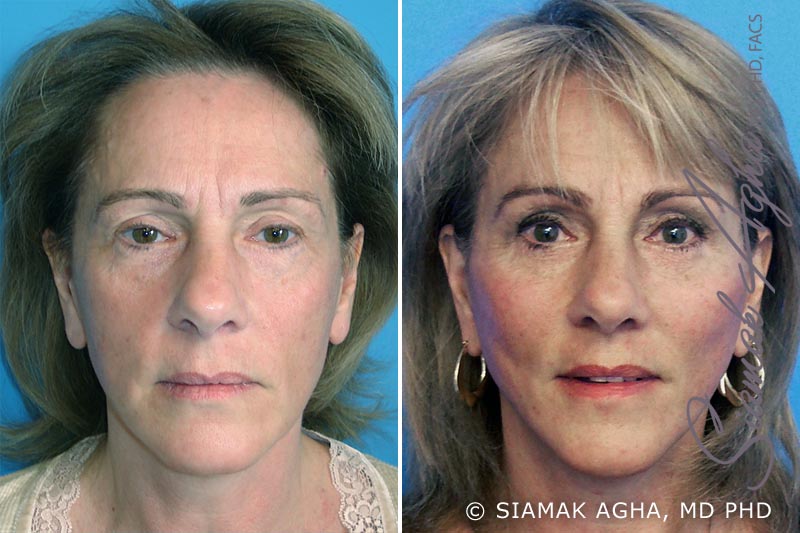
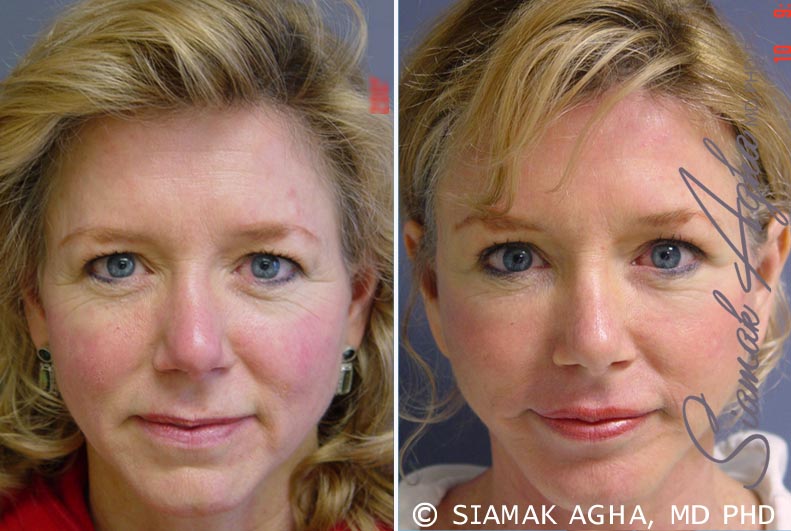
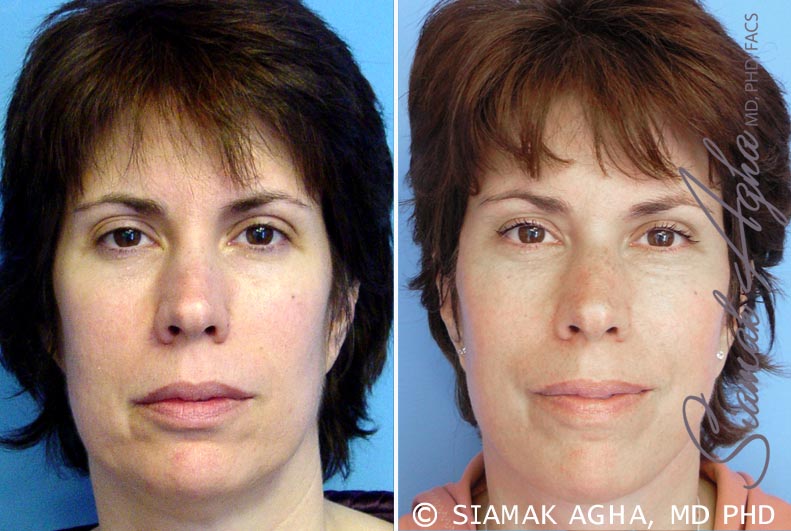
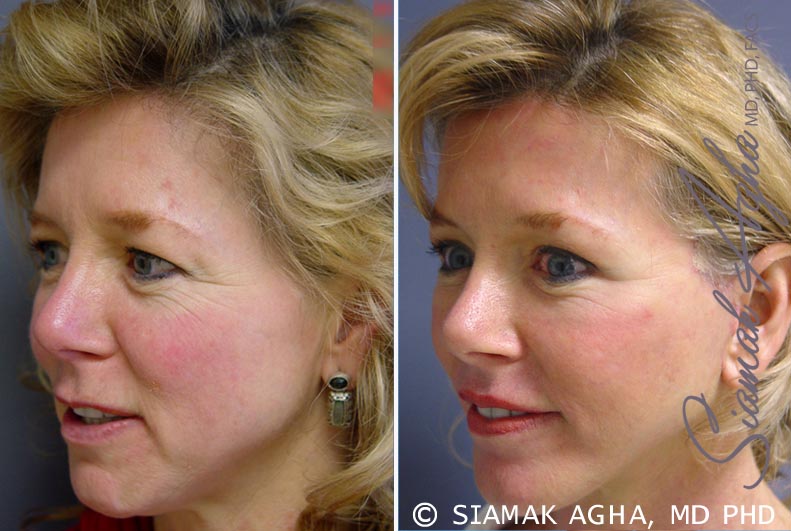
What is a Facelift?
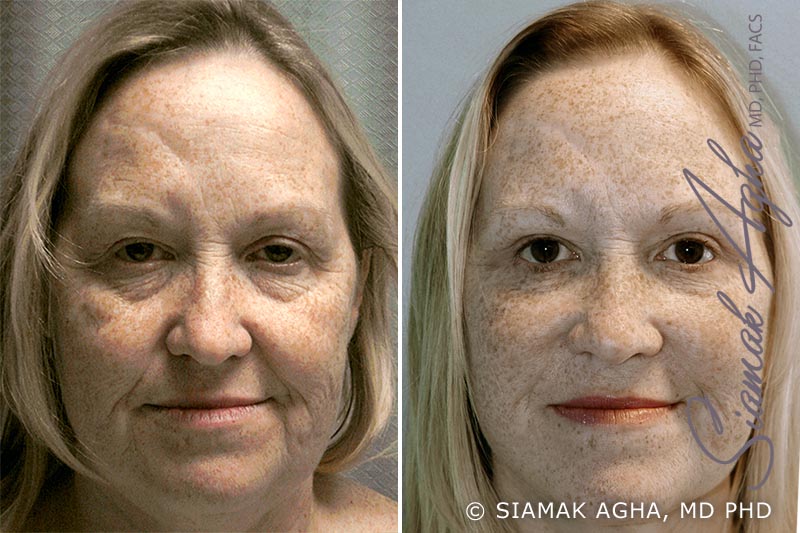
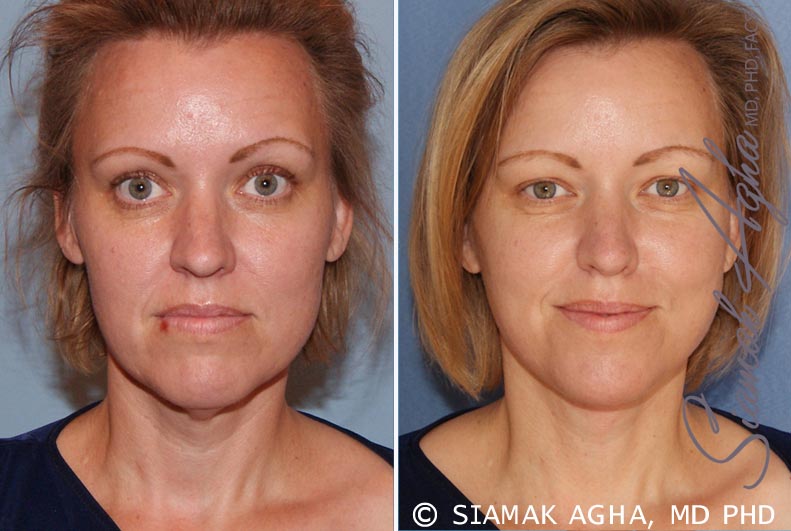
Medically known as rhytidectomy, a facelift reverses the effects of time on your face and neck, making you look like a younger version of yourself.
As you age, two things happen to your face – your skin loses elasticity, and your tissues lose volume. These result in deep wrinkles, jowls on your lower face, and loose skin on the neck.
With a facelift, your surgeon will remove excess skin, smoothen deep folds, and lift and tighten your sagging facial tissues.
A facelift is an excellent solution if you’re bothered by these natural signs of aging and want to restore your youthful, vibrant appearance. It will also correct skin laxity in your neck area that occurs due to massive weight loss.
In fact, the facelift is one of the most popular cosmetic surgeries among adults aged 55 and above in 2018, second only to an eyelid lift.
Here are the most common facelift types:
There are multiple breast lift techniques, but the following are the most common ones that plastic surgeons use.
Traditional Facelift
Also known as SMAS facelift, the standard facelift addresses moderate to severe sagging from the middle of your face down to your neck.
SMAS stands for superficial musculo-aponeurotic system, the connective tissue matrix mixed with fat covering all the facial muscles and nerves. Repositioning it toward your ears provides longevity to your surgical results.
Its incision is just behind the hairline, starting at the temples to the front and the back of the ear. From there, your deeper tissues and muscles are repositioned while excess skin is removed to smooth the creases on your face, eliminate jowls on your cheeks, and get rid of the sagging skin under your chin.
This might be the technique of choice if you recently lost a lot of weight and have a lot of excess skin on your neck.
Deep Plane Facelift
The deep plane facelift is a modification of the traditional facelift that provides longer-lasting and natural-looking results.
There is minimal dissection of the facial skin in this type of facelift, and the SMAS layer is released from the deeper muscle layer. The skin/SMAS composite flap is then repositioned posteriorly and vertically.
Through this technique, there is minimal tension on the incisions, resulting in nearly invisible scars.

How Do Dr. Agha and Dr. Razfar Perform a Facelift?
The technique used depends on various factors, such as the patient’s anatomical features, goals, and extent of the procedure.
Often, a facelift is performed with another procedure, such as eyelid surgery or forehead lift.
Preparation
Before your facelift, you will be given specific instructions on what to do to make sure that you do not develop any complications. You might also be asked to buy a few supplies to prepare for your recovery.
Anesthesia
Though typically performed using general anesthesia, a facelift may also be completed under local anesthesia with sedation if the procedure isn’t that extensive.
For most patients, we prefer general anesthesia since the patient is far more comfortable when asleep.
Liposuction
The procedure is started by infusing tumescent fluid under the skin. This fluid will numb the face and reduce blood loss.
If the patient has a double chin and excessive fat, liposuction of the neck will be performed to remove fat from this region.
Incision
The sign of a remarkable facelift is not only a beautifully rejuvenated face and neck but also a scar that is perfectly placed in a well-hidden crease in front and behind the ear.
The incision is started at the temples within the sideburn hair and continues to the crease in front of the ear, around the ear cartilage, in the crease around the lobule, and ending in the crease behind the ear.
For those patients who have a lot of neck skin – such as in the case of patients who have lost lots of weight – the incision is extended behind the ear further along the hairline so that more neck skin can be excised.
Finally, another one-inch incision is made below the chin to access the neck muscles and elevate the neck skin.
Tissue Elevation
Through the incisions made in front and behind the ear, a portion of facial and neck skin is meticulously elevated from the underlying connective tissues and muscles.
The neck skin is extensively lifted completely as far as the midline from each side. He also raises the neck skin behind and below the ear. Through the incisions made in front and behind the ear, a portion of facial and neck skin is meticulously elevated from the underlying connective tissues and muscles.
The neck skin is extensively lifted completely as far as the midline from each side. He also raises the neck skin behind and below the ear.
Facial Tightening
In a SMAS facelift, the SMAS can be manipulated in a variety of ways.
Depending on the patient’s facial shape, we may lift and suture the SMAS, cut and repair the SMAS, or just infold and tighten the SMAS to create a smooth and lifted layer. A personalized series of suturing is used to tighten and lift the SMAS tissues of the neck and face.
In a deep plane facelift, the SMAS and platysma are released from the underlying facial muscles, repositioned, and secured in a posterior and vertical direction.
After lifting the SMAS, excess skin is excised, and incisions are closed.
In some cases, fat transfer to the cheeks may also be performed in conjunction with a facelift. It is recommended for patients who lost a significant amount of volume in the cheeks due to aging and/or weight loss.
Post-Surgery
You may expect to have a small, thin tube temporarily placed under the skin behind your ear for blood and fluid drainage.
Your skin is closed with stitches that will need to be removed 5-7 days after surgery.

How Do You Recover from a Facelift?
Even though a Newport Beach facelift is a complicated procedure, the good news is you’ll have a fast recovery process.
Typically, patients can go home on the same day of their surgery, as long as they have a family member or friend to care for them.
You will receive oral medications to ease the discomfort you’re feeling, which may subsist for a few days. Expect also to have some bruising and swelling within 7-10 days.
Scars take three to six months to heal fully and fade into a thin white line. But since the location of these scars is inconspicuous, you might feel comfortable going out in public within a week.
Still, it’s vital to protect your face from the sun to help your scars heal faster. Wear a wide-brimmed hat and apply sunscreen regularly when going out.
Here’s an estimated timeline of when you can return to your normal activities barring any complications:
| Timeline | Activity |
|---|---|
| Up to three days post-facelift | Bruising and swelling at their peak |
| 5-10 days | Initial healing completed Return to work (for mini-facelift) Removal of sutures |
| 2 week | Resume normal daily activities Return to work (for traditional facelift) |
| 4 weeks | Light exercises allowed |
| 6 weeks | Regular exercises and strenuous activities allowed |

What Results Can You Expect from a Facelift?
After getting a facelift, you can expect:
- Reduced facial lines and wrinkles
- Firm and smoother skin on the face and neck
- Tighter facial contour
- A more youthful appearance
- Higher self-esteem and sense of self-worth
A 2017 study revealed that patients who underwent facial rejuvenation surgeries like the facelift are perceived as younger and more attractive by casual observers compared to their photos before the surgery.
Because of this, facelift patients generally feel more attractive, adding to their confidence and sense of overall well-being.
Facelift FAQs
-
Treating Ozempic Face
What is ‘Ozempic Face’? “Ozempic face” was termed for sagging and aging facial skin, particularly after rapid weight loss with the use of the type 2 diabetes medication semaglutide…
-
The History and Evolution of the Deep Plane Facelift
No matter your age, you know you want to keep that youthful glow, even as time and motherhood leave their mark. Sure, aging is a beautiful journey, but it’s…
-
Body | Breast | Face | Plastic Surgery
Plastic Surgery for Ehler Danlos Patients
Ehlers-Danlos Syndrome (EDS) is a group of inherited disorders affecting connective tissues, causing joint hypermobility, skin hyperextensibility, and tissue fragility. Living with EDS can be challenging, and many patients…